
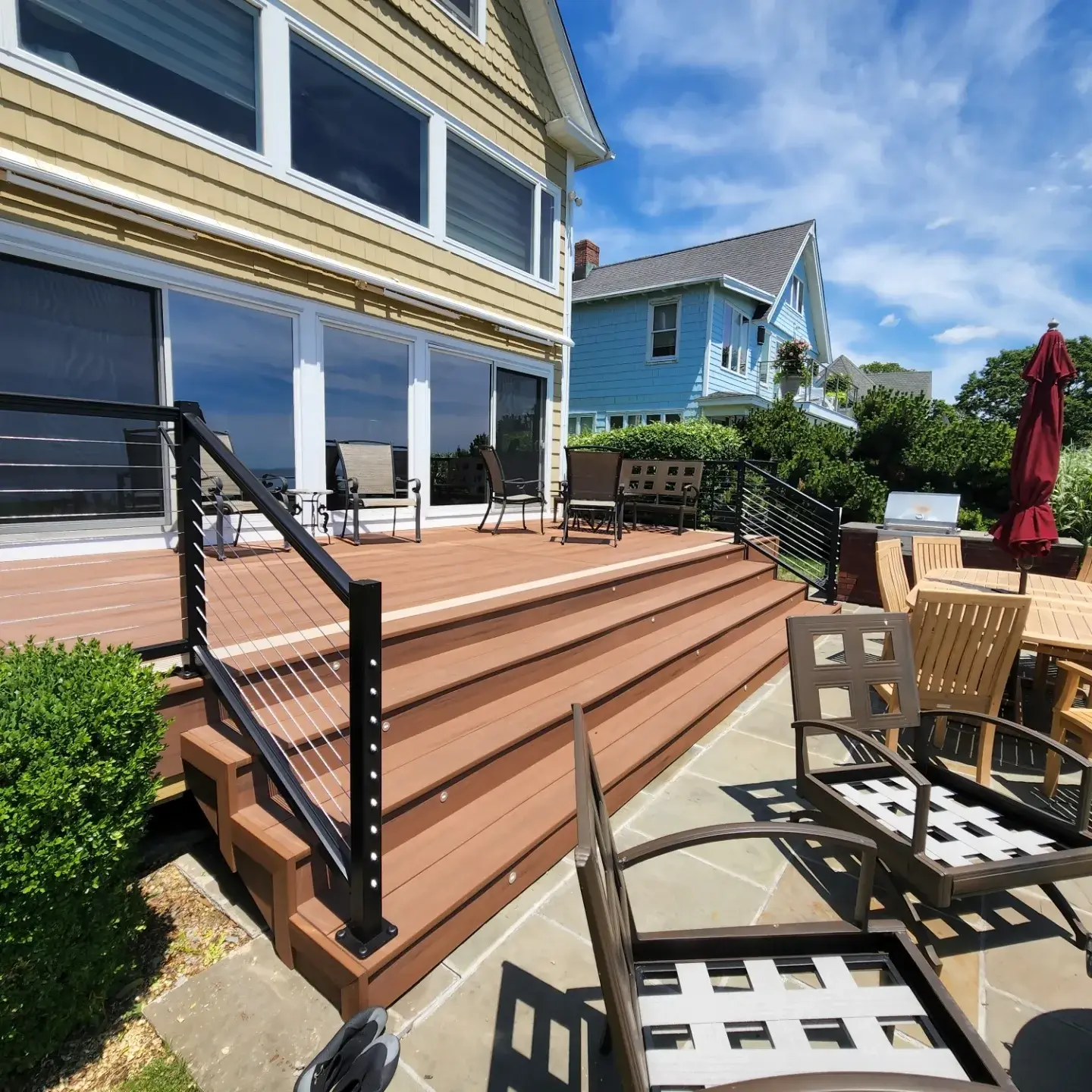
Most Oxford homeowners have no idea what actually happens during a deck build. The contractor shows up, the deck appears a few weeks later, and the bill arrives somewhere in the middle. That mystery often leads to surprises, miscommunications, and missed details that affect the final result for years to come after the crew has packed up and moved on to the next job.
This guide walks through exactly what happens during a professional deck installation in Oxford, from the first site walkthrough through the final town inspection. Knowing the process helps homeowners ask better questions, plan budgets accurately, and recognize the signs of a contractor who takes the work seriously from day one.
The First Walkthrough and Design Consultation
Every deck installation starts with an on-site walkthrough where the contractor evaluates the lot, the house, and the homeowner’s vision for the space. This visit covers slope, drainage, soil conditions, sun exposure, view orientation, and any obstacles like trees, utility lines, or septic systems that affect where the deck can sit. The walkthrough also identifies setback requirements specific to the Oxford zoning code.
Design consultation follows the walkthrough and translates the homeowner’s vision into a buildable plan. 3D modeling shows exactly how the finished deck will look on the property, with options for layout, materials, railings, lighting, and any additional features like covered sections or screened porches. This stage is the cheapest place to make changes, since adjustments cost nothing on a digital model compared to rework after deck installation has already begun on site.
Permit Acquisition and Engineering
Oxford requires building permits for nearly all deck installation projects, including new construction, rebuilds, and any structural modification to existing decks. The permit application includes stamped plans showing footing locations, framing layout, beam sizing, post placement, and connection details that satisfy current Connecticut residential code requirements for outdoor structures across the entire property.
The contractor handles the entire permit process from submission through approval, which typically takes one to three weeks depending on town workload and plan complexity. Skipping permits creates legal liability, voids homeowner insurance coverage, and causes serious complications during future home sales. A qualified contractor never moves forward with a deck installation without the permit in hand and inspection schedule confirmed with the building department.
Foundation Work and Framing
Excavation begins once the permit is approved and the project is scheduled. Footing locations get marked, holes get dug to the required depth, and either traditional concrete footings or helical piers go in depending on the lot conditions and engineering requirements. Connecticut frost line depth requires footings to extend at least 42 inches below grade, and Oxford inspectors verify this depth before any concrete pours into the ground.
Framing follows footing inspection and forms the structural skeleton of every deck installation. Beams sit on the footings, posts rise from the bearings, and joists span between beams to create the surface frame. The ledger board attaches to the home with lag bolts and lateral load connectors that prevent the deck from pulling away from the house. Framing material options include pressure-treated wood, steel, aluminum, and composite from brands like Fortress, ProWood, Owens Corning, and TimberTech Aluminum.
Surface Installation, Railings, and Finishing Details
Surface boards go down after framing inspection passes. Material options for an Oxford deck installation range from traditional wood like cedar and exotic hardwoods such as Ipe to composite and PVC from leading brands like Trex and TimberTech by Azek. Each material installs differently, with specific fastener requirements, gap spacing, and trim details that affect the final look and long-term performance of the surface across the life of the deck.
Railings follow the deck surface and bring the structure up to code for any deck more than 30 inches above grade. Options include wood, composite, aluminum, steel, cable, glass, and wrought iron systems from brands like Feeney Cable Railing, Trex, TimberTech, Westbury, and Viewrail. Finishing details include skirting, stair construction, lighting integration, and any covered or screened additions planned during the original design phase before deck installation began.
Final Inspection and Walkthrough
The town inspector returns once construction is complete to verify that every element meets code. The final inspection covers railing height and baluster spacing, stair geometry, fastener type and spacing, ledger attachment, lateral load connectors, and the structural integrity of the entire system. A qualified contractor walks the inspector through the project and addresses any questions on the spot rather than leaving them for a return visit that delays project closeout.
The homeowner walkthrough follows the town inspection and covers material care, warranty registration, and any maintenance recommendations for the specific materials installed during the deck installation. Quality contractors include their own certified inspectors as part of the process, which catches any issues before the town inspector ever shows up on site. For expert deck installation in Oxford and across the surrounding Connecticut communities, contact Outdoor Space Builders at (203) 715-7853 to schedule a consultation and start your project the right way from the first sketch to the final inspection.